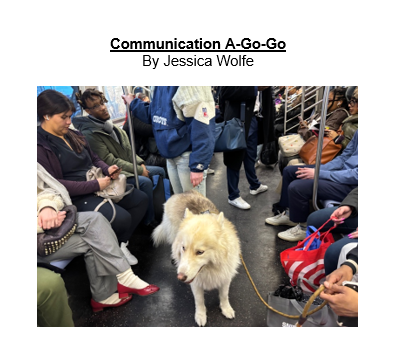
On a misty Sunday I walk down a new street I discovered in my neighborhood, reflecting on the best and worst examples I’ve encountered with communication. I reflect on last night when a boy said nothing wrong, and yet for some reason sucked the life out of me with his conversation style, vampirically curating a caffeine crash. I reflect on how inspired I’ve been by this sort of dumb girl I’ve been around lately, how she says things that I would never think to say out loud, and because she’s hot, she’s powerful enough to do so. I reflect on the list of those who I’ve failed to communicate with and I wonder if I had let my guard down, spoken my mind more freely, if that would have helped. I wonder what I could have done better. Most positively, I reflect on what makes my friends so fun to talk to. All the while, attempting to understand if the characters in Richard Linklater’s indie darling Slacker are rude for their rule-breaking communication style or onto something. What drives our conversations with each other? Do we speak because we have to, I mean how else would we pass the time, or do we speak solely to connect? Do we continue to speak even if that connection fails?
What is at the base of proper, sociable human communication? Is it empathy? Is it power? Dedication to craft? Personality? Status? What makes one person fun to talk to, and another not worth the time? Is it being attractive while you do it? In my mind, the answer is balance. A balance between being smart, referential, funny and receptive, leaving space for everyone involved in the conversation. Balance cannot exist without a counterpart, so a world where some people are worse at it than others is a necessity. In the conversations I’ve had with people, I’ve come to understand everyone values different things. This calls into question this phenomenon between people called “chemistry.” Two people connect the most when they share the same values. In the flow of a party, we seek the one who can remind us we are not alone, we are not alien in this world, but rather similar and made up of the same stuff. We seek our soulmates.
As in a recent “contained thought loop” or poetic monologue I wrote it feels best when these things click on a chemical, instinctive level:
I want to take you with me. To some inundated landscape that is closest or best, for some reason. The things determining the “closeness” or “bestness” is why I choose to bring you… because we both agree, and I don’t have to teach you, or fluctuate, or wrap my head around some new perspective that intrigues me, or flee the cuckoo's nest. We just have the same closest and same bestest code by which we live. I wait for the day we disagree… and together get to explore the flowering lobotomy of argument.
When measuring communication chemistry, I use a similar scale to the +/- used in PihKAL: A Chemical Love Story, by Alexander Shulgin and Ann Shulgin. Ultimately, we are all looking to find a +4 experience which can be described as follows:
“a rare and precious transcendental state which has been called a peak experience, religious experience, divine transportation and a state of samadhi…It is not connected to the +1, +2, and +3 of the measuring of a drugs intensity – it is a state of bliss, a participation mystique, a connectedness with both the interior and exterior universes which come about after the ingestion of a psychedelic drug but is not necessarily repeatable with a subsequent ingestion of that drug. If a drug or technique or process was ever to be discovered which would consistently produce a +4 experience in all human beings it is conceivable that it would signal the ultimate evolution and perhaps the end of the human experiment.”
The best people to speak to are the ones who bring you as close to a psychedelic experience as possible, even when sober. The characters in Slacker subscribe heavily to this value system.
Chemistry creates a structure from which a relationship can be built upon, it gives us something to grasp onto on those days we wake up forgetting where we are. The dream being to find someone who when your chemicals combine, you create fireworks or something you can live off of, like H2O or Oxygen. At the very least we hope to avoid creating something poisonous like chloroform, you’re the bleach and I’m the ammonia. Together, we create an outdated form of anesthesia. The lexical semantics of human communication implies that my idea of “cookie” matches your idea…are we both thinking of peanut butter? And is chocolate chip a close second? There was once a time I walked for hours around Brooklyn trying every peanut butter cookie I could find until I determined the best. I wonder if you’d agree with my choice. I’ve spent time in my life feeling sentimental toward someone I don’t even know yet… Now back to the topic.
My containers for this essay are Richard Linklater’s Slacker, White Lotus, and the questions I asked people at the events I attended. Those questions are as follows: Who is your favorite person to talk to? Do you have any conversational rules that you adhere to? How do you decide what not to communicate? Do you think the majority of people are fun or tedious to talk to? As per usual, I would love this to be an ongoing conversation, so if you’re reading this now, please feel free to reach out and give me your answers.
Those who answered saying their parents are their favorite people to talk to, I respect you but I do not understand you. Of course, some said either their same gender best friend, or their partner. Some took a more philosophical approach saying it’s the people who they feel most themselves around, who bring a level of nostalgia, acceptance, and who match their freak. You’re probably having a successful conversation if by the end you're toying with the idea of making a podcast, or a skit for Instagram Reels, or better yet a short film about exposing your balls to each other. A surprising majority of people I spoke to said themselves. This made me proud. We should love speaking to ourselves, and be able to rely on our own perspectives for developing a world view. Although I love communicating with a crazy mindset, to love speaking to yourself requires a level of sanity I'm excited a lot of people around me are able to find, they're crashing out but the R is silent. The best communication participates in one of these qualities: nostalgia, acceptance, shock/humor, or intuitiveness.
Rules are important when it comes to dealing with people. The more fixed you can be in the ways you show up to a party, the more friends you may make. I've learned it's important to let other people talk (although if everyone was doing that the world would get very quiet) and also to ask questions. Some people create rules around what they shouldn't talk about, assigning negative connotations to certain topics, like work, sadness, or existential plights. 70% of the time if one of these things comes up it requires a positive spin, because hanging out is supposed to be fun. "Don't deny those feelings but wallowing is pointless." If it makes you feel really negative, chances are that someone with normal human empathy will also feel negatively, and that's not why we hang out with each other… right? How did we collectively decide that something serious goes against the heart of a party?
My Father also requires people to speak clearly with good pronunciation (he used to tease out my Valley Girl slurs in my intonation, stopping me in the middle of a sentence as if to tell me to sit up straight) and to speak with authority if you have the research to back it up, "what's your source for that," he often asks on Facebook. Some honorable rules to mention: remain lucid and logistical, don't let your guard down, don’t bring up something controversial if you’re not in the mood to talk about it, a great ratio to use if you want someone to like you: give them three compliments followed by a tease. In general, it seems everyone agrees not to talk about topics that may be a drag to bring up. I tend to advise my friend Scarlet, "we keep it right here," holding a hand at nose height and hovering it around.
Slacker breaks most of these rules. Characters don't ask questions, they don't leave room for the other person to talk, in fact they usually walk away after they’ve made their point, and they bring up sadness and existentialism at all times. The other person is not meant to respond. And yet, nothing is embarrassing. Maybe this is because the characters in Slacker understand that the throughline of everything is chaos, so why would they assign themselves rules? Or perhaps it comes from this: “Rejection. That one thing I’m not scared of anymore. I've conquered the fear of rejection. I guess I look at it like a trade-off. You reject, you're being rejected, constantly. So how can you let it bother you?”
Slacker also breaks most rules in film, it's quite known for its successful bending of everything a movie shouldn't be. In terms of screenwriting, Slacker does not have an interest in natural communication, it also barely had a script apparently. Each character goes on long, existential tangents, almost monologues, which if this was how people actually communicated, despite its pauses for talk about Smurfs and Madonna’s pap smear, would drive the world mad. “The universe is out of hand,” one-character states after not being able to get into a show. “Couldn’t get in. Universal sadness all around. The universe is out of hand.” They have no interest in the return of their investment, they have no real interest in connection, leaving each interaction in a wormhole that only exists for that moment. It’s as if a person doesn't need to be there at all to receive their dialogue. It is the kind of defiance of rules that rubs off on you as you watch the film, and if you try to talk to the guy you invited over for company, you find that you begin following the constructs of Slacker’s communication style.
I like to put Slacker next to season three of White Lotus because it has the opposite constraints: everything is political, everything is driven by the fear of something. The characters, and Mike White, calculate every move, every moment, developing metaphor and grief and premeditation in every scene that occurs. It doesn't speak at-large, it speaks in detail. White Lotus is fueled by its rules and regulations, and the political relationships between the rich and those who find themselves among them. A rule for Victoria Ratliff: “She needs to fear poverty, Tim, like everyone else we know. That way she’ll make good choices.”
I’ve been working on being less political in my communication with people, a piece of advice I’ve given to friends lately, believing it’s no longer embarrassing to hit that person up again, where when I was younger, I thought it was. People enjoy alcohol as much as they do because it brings them closer to being like the characters of Slacker. What makes parties exciting is the lack of inhibition, lack of professionalism, it’s as close as we get to being in the animal kingdom. When we go to the bar we’re going to the watering hole, and in a place as beautiful as the watering hole, we all start with common ground and proceed to see how much we fuck it up before the night’s over. We can’t begin by baring claws and teeth when the dimmed fluorescent sun is shining through a waterfall of draft beers and pussy.
Some people are born themselves, and some people learn to be themselves by observing other people. Those people are born with a receptacle around their consciousness, only to be accessed when the environment is dull enough. My favorite people to talk to are those who have no container, who cannot help but be themselves. I like a person who can make me laugh. I like any mysterious boy – I could name a few – who create universes when they speak to me. One second of talk with him could become 20 minutes of conversation because to unpack his world takes an army. That guy, anyone who reminds me of that guy, and also my close female/gay friends who are equally invested in a journey of growth as I am, who relate to the things I have to say, and see my vision wholly, are my picks.
The best communicator I know just speaks. No rhyme, no reason, just talks unapologetically without premeditation of the feelings of those around them, with the knowledge that those knots can be worked through if necessary. If I believe in what I’m saying enough, if there is a point to it, then the other shouldn’t be offended. Chatting dies in premeditation. I consider this the “best” because it has historically felt impossible to me, also a reason I feel inspired by the lawless land of Slacker. In an interview discussing the film, Linklater says “It’s not easy being yourself on purpose, take after take.” When you are so yourself, imposter syndrome cannot take hold because there is no imposter inside of you. You are on your intended path.
As psychologist Waltzlawick says, “one cannot not communicate.” It is a thing that even on our quietest days, we cannot help but do. Even when we know we’re bad at it, or we know we’re causing fights, we cannot help but to communicate anyway. We wear our lives on our faces, collecting signs of memories and our internal worlds. The quieter you are, the more room you leave for people to be wrong about you. Although, that’s fun too. “The thing most feared in secret always happens.” We each have our personal style toward everything – toward how we masturbate, how we dress, how we cook, and how we communicate. These tastes are a consistent expression of who we are, “one cannot not communicate.” In that sense, I find it best to not pretend to be anything, because it will all become readable anyway.
When communication fails what are we left with? The love we have for each other, the courage to try again and, at times, the wisdom to walk away completely.